

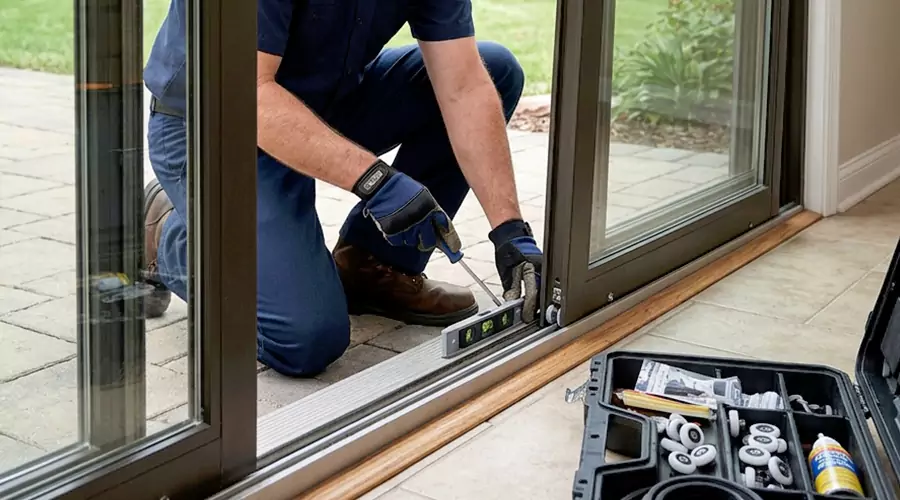

Sliding glass doors are built for smooth, everyday use, but like any mechanical system, they can develop problems over time. While some issues can be handled with basic cleaning or simple adjustments, others require professional attention. Knowing when to call a technician can save you from costly damage, safety risks, and repeated repairs.
In this guide, we will explain the key warning signs that indicate it is time to call a professional for sliding door repair, along with what happens if problems are ignored.
Why Professional Sliding Door Repair Matters?
Sliding doors may look simple, but they involve several interconnected components:
- Rollers that carry the door's weight
- Metal tracks that guide movement
- Frame alignment systems
- Locking mechanisms
- Glass panels and seals
When one part fails, it often affects the entire system. A professional can accurately diagnose the root cause and fix it without causing further damage.
Signs You Should Call a Professional Immediately
1. The Door Is Extremely Hard to Open or Close
If your sliding door feels heavy or nearly impossible to move, it is a strong sign of a deeper mechanical issue.
This may be caused by:
- Severely worn rollers
- Damaged track surface
- Frame misalignment
If basic cleaning does not improve movement, professional repair is needed.
2. The Door Keeps Coming Off Track
A sliding door should stay securely on its track at all times.
You should call a professional if:
- The door frequently derails
- It becomes unstable during movement
- You have to constantly reposition it
This issue often indicates damaged rollers, track deformation, or alignment problems.
3. Grinding, Scraping, or Loud Noises Continue
Unusual noises are early warning signs, but when they persist, they usually mean damage is already present.
Common causes include:
- Worn rollers
- Bent track sections
- Internal hardware failure
If lubrication and cleaning do not stop the noise, professional inspection is necessary.
4. Visible Damage to the Track or Frame
Physical damage should never be ignored.
Look for:
- Bent or dented tracks
- Cracked frames
- Warped metal sections
- Broken mounting points
These issues typically cannot be fixed with DIY methods.
5. Locking Problems Affect Security
A sliding door that does not lock properly is a serious safety concern.
Call a professional if:
- The lock does not engage fully
- The latch does not align with the strike plate
- The door can be forced open even when locked
This may be caused by alignment issues or internal lock failure.
6. Uneven or Sagging Door Position
If your sliding door looks tilted or uneven, it is usually a sign of roller or frame issues.
Symptoms include:
- One side of the door sits lower
- Visible gaps around edges
- Difficulty closing the door properly
This often requires adjustment or replacement of key components.
7. Repeated Problems After DIY Repairs
Sometimes homeowners attempt basic fixes such as cleaning or lubrication, but the issue returns.
If you notice:
- Temporary improvement followed by failure
- Repeated sticking or jamming
- Ongoing alignment issues
It usually means the root cause has not been addressed.
8. Glass Panel Movement or Instability
If the glass panel feels loose or unstable in the frame, it is a serious issue.
This may indicate:
- Frame damage
- Loose structural components
- Broken seals or supports
Professional repair is essential to ensure safety.
9. Water Leaks or Air Drafts Around the Door
Sliding doors are designed to seal tightly.
You should call a technician if you notice:
- Water entering during rain
- Cold or hot air leaking through edges
- Visible gaps in sealing
This often indicates alignment or weather stripping failure.
10. Door Requires Excessive Force to Operate
A sliding door should move with minimal effort.
If you find yourself:
- Pushing hard to open it
- Struggling to close it fully
- Feeling resistance at multiple points
There is likely a serious mechanical or structural issue.
Risks of Delaying Professional Repair
Increased Damage
Minor issues can quickly escalate into:
- Damaged tracks
- Broken rollers
- Frame deformation
Higher Repair Costs
Early repair is usually affordable, but delays can require full system replacement.
Safety Risks
A faulty sliding door can:
- Come off track unexpectedly
- Create glass breakage risks
- Become difficult to secure
Security Concerns
A poorly functioning lock or misaligned door can make your home vulnerable.
What a Professional Technician Will Do?
1. Full Inspection
They examine:
- Rollers
- Tracks
- Frame alignment
- Locking system
2. Diagnosis of the Root Cause
Instead of treating symptoms, they identify the actual cause of the problem.
3. Repair or Replacement
Depending on the issue, they may:
- Replace worn rollers
- Repair or realign tracks
- Fix lock mechanisms
- Adjust door alignment
4. Testing and Adjustment
After repairs, the door is tested for:
- Smooth movement
- Proper locking
- Correct alignment
How to Reduce the Need for Emergency Repairs?
Keep the Track Clean
- Remove dirt and debris regularly
- Vacuum and wipe the track surface
Use Proper Lubrication
- Apply silicone-based lubricant when needed
- Avoid heavy grease that attracts dust
Inspect Rollers and Hardware
- Check for wear or rust
- Tighten loose screws
Avoid Forcing the Door
- Do not push or slam a stuck door
- Address resistance early
Final Thoughts
Knowing when to call a professional for sliding door repair is important for maintaining safety, security, and smooth operation. While minor issues like dirt buildup or slight stiffness can often be handled at home, more serious problems such as misalignment, damaged tracks, worn rollers, or lock failure require expert attention.
If your sliding door continues to stick, makes unusual noises, comes off track, or fails to lock properly, it is best to contact a professional before the issue becomes more expensive or dangerous. Early intervention ensures your sliding door remains reliable, secure, and easy to use for years to come.
 Reviews
 (532)
(532)